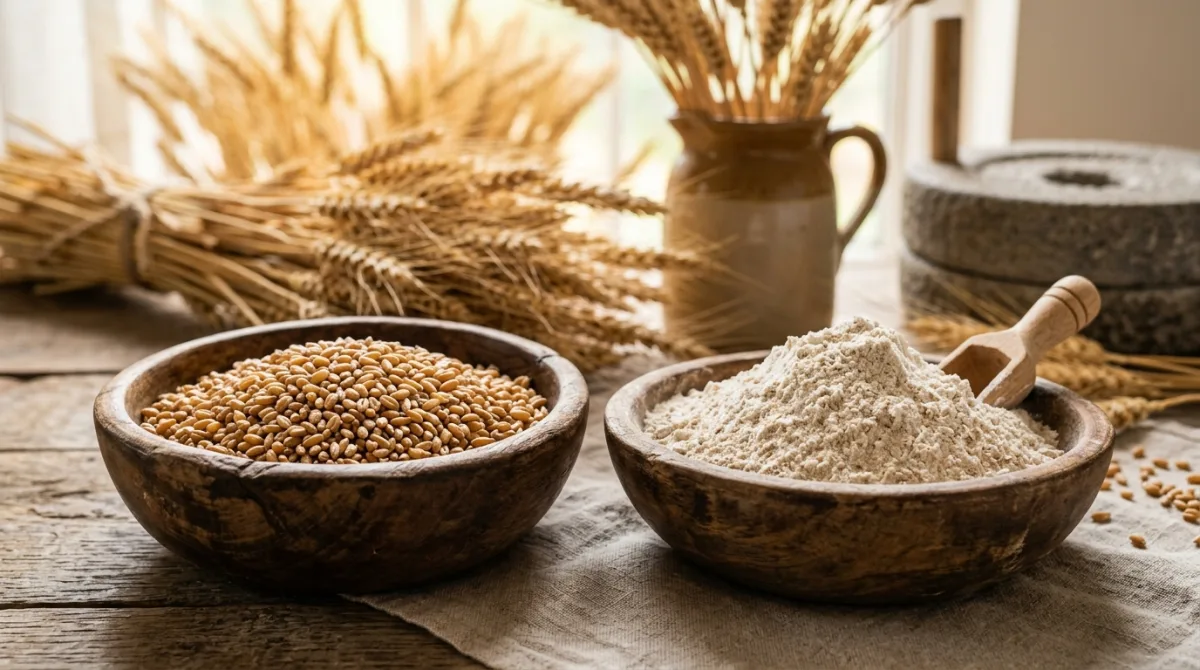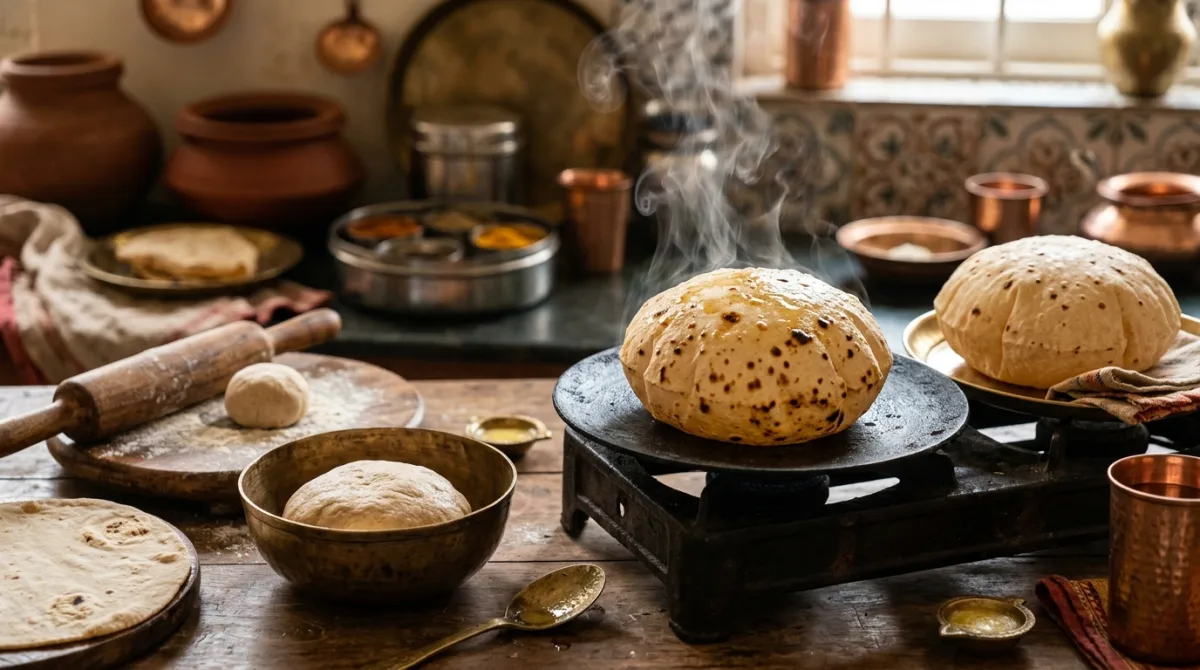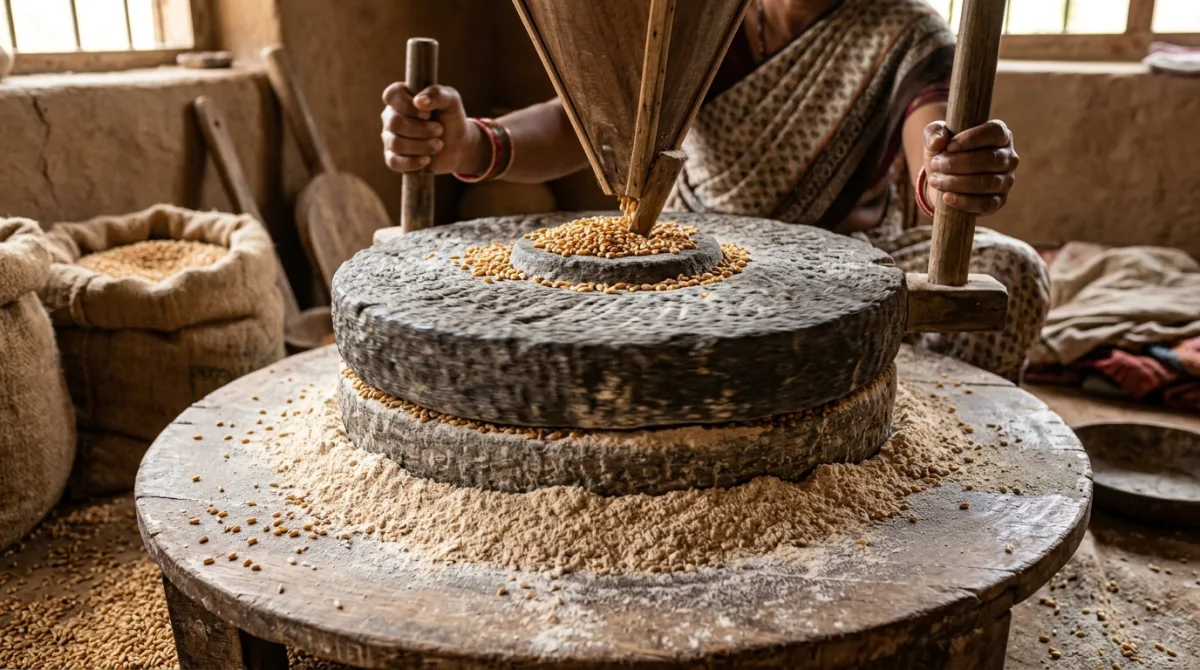
For more than four millennia, the slow rotation of the stone chakki was the beating rhythmic heart of the Indian domestic food sanctuary. In the mid-20th century, the global industrial revolution replaced these ancient stones with high-velocity steel roller mills. The objective was straightforward: mass industrial speed, uniform particulate consistency, and flour engineered to withstand months of warehouse logistics. But what biological toll did humanity pay in exchange for supply-chain convenience?
The Core Scientific Discovery
Industrial roller mills operate at 400–600 RPM, producing frictional contact heat surpassing 75°C to 90°C. This dry heat thermal shock deactivates living phytase enzymes and oxidizes natural Vitamin E. In contrast, Raghuvir Cold-Milled Stone Chakkis rotate below 100 RPM, keeping grinding temperatures under body heat (38°C–40°C), preserving 100% of the wheat germ and micronutrient vitality.
1. The Thermal Trap: What Extreme Shearing Heat Does to Flour
Inside a commercial roller milling plant, wheat kernels pass through successive banks of corrugated chilled-steel cylinders revolving at enormous velocity. As the grain is crushed, compressed, and sheared in milliseconds, severe frictional thermodynamics take over:
- Thermal Denaturation of Endogenous Phytase: Whole grains naturally contain phytic acid—a compound that binds to essential minerals like iron, zinc, and calcium, hindering human absorption. Whole wheat carries an innate enzyme, phytase, designed to break down phytic acid during dough resting. However, exposure to friction temperatures over 55°C permanently denatures phytase, rendering these crucial trace minerals bio-unavailable to your body.
- Oxidative Degradation of Natural Vitamin E (Alpha-Tocopherol): The wheat germ houses one of nature’s richest concentrations of natural Vitamin E. At temperatures above 60°C, these polyunsaturated lipid chains undergo rapid thermal oxidation, stripping their antioxidant potency and yielding a chemically damaged lipid profile.
- Depletion of Thermolabile B-Complex Vitamins: Thiamine (Vitamin B1), Riboflavin (B2), and Folate (B9) are notoriously heat-sensitive. Peer-reviewed food biochemistry studies reveal that roller-milled flours suffer between 40% and 60% degradation in natural B-vitamin density during high-speed grinding alone.
2. The Anatomy of a Wheat Grain: The Sacrificed Wheat Germ
To understand why modern mass-market flour leaves families feeling bloated yet under-nourished, one must examine the tri-part architecture of the whole wheat berry:
The Endosperm (83%)
The central energy storehouse. Composed primarily of starch granules embedded in a protein matrix (glutenin and gliadin). Provides caloric energy but possesses minimal trace micronutrients on its own.
The Bran (14.5%)
The protective multi-layered husk. Packed with insoluble dietary fiber, lignans, prebiotic arabinoxylans, and trace minerals like selenium, copper, and magnesium.
The Germ Embryo (2.5%)
The biological reproductive nucleus. Abundant in essential unsaturated fatty acids, octacosanol, zinc, and pure Vitamin E. It is the living nutrient heart of the grain.
The Commercial Dilemma: Because the wheat germ contains active, living plant oils, freshly milled authentic whole flour naturally has a shelf life of approximately 60 to 90 days before these oils naturally oxidize. To create packaged flour that can sit on warehouse pallets for 9 to 12 months without spoiling, industrial roller operations mechanically peel away and discard the wheat germ entirely. What remains is biologically dormant flour.
The Raghuvir Commitment: At our state-of-the-art hygienic facility in Kadadara (Dehgam, Gujarat), our cold-stone chakkis gently homogenize the wheat germ into the flour. The nutrient-rich germ oils are microscopically dispersed across every starch molecule—preserving life-giving nutrition without synthetic preservation.
3. The Chemistry of Pure Unbleached Flour vs. Additives
Natural, fresh whole wheat flour possesses an unmistakable warm, creamy-golden undertone caused by natural carotenoid pigments (lutein and zeaxanthin). Unfortunately, mass consumer conditioning has often associated bright chalk-white flour with purity.
To simulate brightness and speed up artificial aging, commercial industrial millers historically introduced chemical bleaching agents:
- Benzoyl Peroxide: Bleaches carotenoids white while producing oxidation by-products.
- Potassium Bromate & Azodicarbonamide: Artificial dough conditioners designed to artificially inflate gluten volume.
Raghuvir Atta is 100% Unbleached, Unbromated, and Chemical-Free. We believe what goes into your family’s body should remain pure, wholesome, and unadulterated—exactly as nature engineered.
4. Two In-Home Diagnostic Tests for Flour Purity
You do not require an analytical laboratory to assess the authentic quality of your kitchen flour. Try these two simple, definitive tests:
Test 1: The Warm Water Olfactory (Aroma) Test
Take two tablespoons of flour in a clean ceramic bowl. Add two tablespoons of warm water (approx. 45°C) and knead lightly for 15 seconds without adding salt or oil. Bring the paste close to your nose. Authentic stoneground whole flour immediately releases an aromatic, sweet, nutty bouquet reminiscent of roasted harvest wheat. Industrial roller-milled flour smells neutral, papery, or faintly chalky.
Test 2: The Glass Sedimentation & Bran Cleavage Test
Stir one tablespoon of flour into a tall transparent glass of cold water. Allow it to rest undisturbed for 30 minutes. True stoneground chakki flour exhibits multi-layered sedimentation: clear golden carotenoid suspended water, with distinct amber flecks of fibrous wheat bran settling naturally. Refined or stripped flour creates a milky-white colloidal suspension with minimal visible bran strata.
“When you slow down the millstone, you protect the living soul of the grain. Nutrition is not measured in tonnes per hour; it is measured in the health and vitality of those who gather around the dining table.”